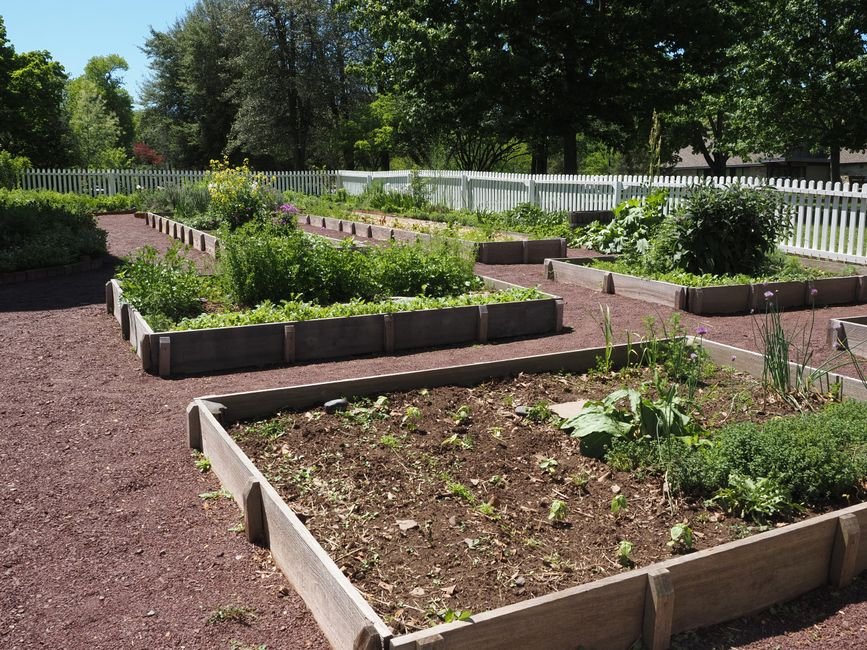
You’ve got a sunny patch of yard, a list of vegetables you want to grow, and zero idea where to start with actually building something. Sound familiar?
Here’s the short answer: a raised garden bed is one of the easiest DIY outdoor projects you can build in a weekend, and you don’t need a carpentry degree to do it. The most popular plan is a 4 x 8 raised bed built from 1-by-6 boards, which costs around $80, $150 in materials and takes about two hours to assemble.
This article contains affiliate links. We may earn a commission on purchases made through them, at no extra cost to you.
This guide gives you everything in one place, exact dimensions, cut lists for three different styles, material options, soil mixes, and planting layouts. No fluff, no “maybe try this”, just real plans you can follow from the first cut to the first tomato.
Quick summary before we dig in:
✅ A 4-foot-wide bed is the sweet spot, you can reach the center from either side without stepping in
✅ Natural cedar is the best wood for longevity, expect 10-15+ years outdoors
✅ A standard 4x8x12-inch bed needs roughly 20-22 bags of soil (or about 3.5 cubic yards in bulk)
✅ You can build a basic raised garden box for under $100 if you choose the right lumber
✅ Raised bed with legs plans are covered here too, perfect if bending down is off the table
—
Raised Garden Bed Plans: Sizes, Dimensions, and Layouts
Before you buy a single board, you need to know what size makes sense for your space and your body.
Standard Raised Bed Dimensions
The most important rule: keep the width at 4 feet or less. That’s the distance most people can comfortably reach from the side, about 2 feet on each side. Go wider and you’ll be stepping in to reach the middle, which defeats the whole purpose.
Common sizes and what they’re good for:
| Size | Best For | Boards Needed |
|---|---|---|
| 4×4 ft | Small spaces, beginners, herbs | 8 pieces of 1×6 @ 4 ft |
| 4×8 ft | Most home gardens, vegetables | 12 pieces of 1×6 @ 4 ft and 8 ft |
| 2×6 ft | Narrow patios, balconies | 8 pieces of 1×6 @ 2 ft and 6 ft |
| 4×12 ft | Serious gardeners, row crops | Uses 3 inner support stakes |
Raised Bed Depth, How Deep Do You Actually Need?
This one gets debated a lot. Here’s the honest breakdown:
- 6 inches: Herbs, lettuce, and shallow-rooted greens
- 12 inches: Most vegetables, tomatoes, peppers, beans, cucumbers
- 18-24 inches: Root crops like carrots, parsnips, beets
If your bed sits on native soil (not a deck or patio), roots can grow down into the ground below, so a 12-inch bed works for nearly everything. If it’s on a hard surface, go deeper.
A standard 12-inch-deep build a raised bed plan uses two layers of 1×6 boards stacked on top of each other, since a 1×6 is actually 5.5 inches wide. Two boards = 11 inches of depth, which is close enough.
Free Raised Garden Bed Plans PDF, What to Look For
Sites like Instructables and Reddit r/DIY have community-shared plans with real photos. When you download free plans, always check that they include:
- Exact dimensions in inches
- A cut list with number of pieces
- Corner joint method (butt joint vs. lap joint)
- Hardware list (screw type, length, quantity)
If you want a done-for-you planning tool, the Almanac Garden Planner from the Old Farmer’s Almanac is one of the most referenced tools online for mapping your raised bed vegetable garden layout digitally before you build anything.
—
How to Build a Raised Garden Bed Step by Step
Let’s build the most popular version: a 4×8 raised bed using 1-by-6 boards, 12 inches deep.
Materials and Cut List for a 4×8 Raised Garden Bed
Lumber:
- 4 pieces at 8 feet long (long sides, each side panel gets 2 boards stacked)
- 4 pieces at 36 inches long (short ends, cut from longer boards)
- 4 corner stakes: 2×2 or 2×4, cut to 12 inches long (longer if you want them in-ground for stability)
Hardware:
- 2.5-inch exterior-rated screws (deck screws work well), about 40-50 screws total
- Optional: L-brackets for extra corner strength
Tools needed:
- Circular saw or miter saw
- Drill/driver
- Tape measure, square, pencil
Step-by-Step Build Instructions
Step 1, Cut your boards.
If you bought pre-cut 8 8 foot boards, cut 4 of them in half to get your 36 inches long short-end pieces. You’ll have 8 pieces for the long sides and 4 pieces for the ends.
Actually, let’s be precise. For a true 4×8 bed with the corner stakes sitting inside:
- Long side panels: 8 feet (96 inches), no cutting needed
- Short end panels: 45 inches each (96-2×2 stake width, adjusted for your stake thickness)
- If using 2×2 corner stakes (actually 1.5 inches), short panels = 93 inches minus 3 inches = 45 inches on each short end
Many builders simplify this and do butt joints with 16 1/2 inches overlap pieces, so check your specific plan.
Step 2, Build the short ends first.
Stack 2 short boards. Clamp a corner stake flush at each end. Screw through the boards into the stake, 2 screws per board, so 4 screws per corner.
Step 3, Attach the long side panels.
Stand up both short end assemblies. Fit the long side panels between them (or overlap them at the corners, depending on your joint style). Drive 2 screws per board through the long panel into each corner stake.
Step 4, Set 4 pieces on the ground.
Flip the frame right-side up. Place it in your chosen spot. Use a level to check that the top edge is even, shim with gravel if one corner dips.
Step 5, Add a center support stake (for 8-foot beds only).
A single 2×4 stake driven into the middle of each long side prevents the boards from bowing out over time as the soil pushes against them.
That’s it. No fancy joinery. No woodworking experience required.
—
Raised Garden Bed with Legs (Elevated Planter Plans)
A raised bed with legs, also called an elevated planter, changes the game for anyone who has trouble kneeling or bending down for extended periods.
Raised Garden Bed Plans with Legs, Dimensions
The most comfortable working height is 30 to 36 inches from the ground to the top of the bed. That puts the soil surface at counter height, so you can work from a chair or standing without hunching.
Materials for an elevated planter (2×4 ft bed at 32 inches tall):
| Piece | Quantity | Dimensions |
|---|---|---|
| Box sides (long) | 2 | 1×6 @ 48 inches |
| Box ends (short) | 2 | 1×6 @ 24 inches |
| Legs | 4 | 4×4 @ 32 inches |
| Bottom slats | 5-6 | bed frame slats from 1×4 @ 24 inches |
| Cross braces | 2 | 2×4 @ 44 inches |
Attach the box to the legs first using pocket screws or direct screwing from outside the leg into the box corner. Then install the bed frame slats across the bottom with 1-inch gaps for drainage. Staple landscape fabric over the slats before filling with soil.
For extra stability, add a lower cross brace, a 22 inch piece of 2×4 spanning between the legs on each short side, positioned about 10 inches above the ground.
Rolling Steel Planter Option
If you want to move the bed around (following the sun, or just getting it out of the way), a rolling steel planter with locking casters is worth considering. These are typically metal-framed boxes on wheels, not a true wood build, but a legitimate alternative that several Reddit r/DIY members swear by for patios.
Check out this resource for elevated and standard raised garden bed plans built for every skill level: Browse raised garden bed plans here
—

Foto: Jason Youngman via Pexels
Best Wood for Raised Garden Beds (and Other Materials)
Material choice is where most beginners get confused, and where you can either spend smart or waste money.
Cedar Raised Garden Bed, The Gold Standard
Natural cedar is the most recommended wood for raised garden beds, and it’s not even close. Cedar contains natural oils that resist rot and repel insects without any chemical treatment. A well-built cedar raised garden bed typically lasts 10-20 years outdoors, even in wet climates.
You’ll find cedar at Home Depot and Lowe’s in the dimensional lumber section. Look for “western red cedar”, it’s the most widely available variety for DIY builds.
Cost: Cedar runs about 20-40% more than pine, but the longevity makes it cheaper per year of use.
Other Wood Options
- Redwood: Similar performance to cedar. Hard to find outside the western US.
- Douglas fir: Cheaper, but will need replacement after 3-5 years.
- Pine: The inexpensive raised garden bed choice. Works fine for a season or two, or if you plan to paint/seal it.
- Modern ACQ pressure-treated lumber: Generally considered safe for vegetable garden use by most gardening organizations, but it’s a personal call, many gardeners prefer to avoid it around edibles.
Galvanized Steel and Cattle Trough Options
Galvanized tubs and cattle troughs are having a major moment in the DIY gardening world, and for good reason.
A standard livestock water tank (typically 2×8 feet or round) makes a ready-made raised garden box with almost no assembly. You drill drainage holes in the bottom, fill with soil mix, and start planting. They last practically forever.
Galvanized steel doesn’t leach anything harmful into soil at concentrations that affect plant or human health, this is generally agreed upon in the gardening community.
Where to find them: farm supply stores, Tractor Supply Co., or sometimes Home Depot in rural areas.
—
How to Fill a Raised Garden Bed: Soil Mix and Cubic Yards
Building the frame is the fun part. Filling it right is the part that actually determines whether your plants thrive or struggle.
The Classic Raised Bed Soil Mix
The go-to formula used by most experienced gardeners is a mix of:
- 1/3 topsoil (bulk or bagged)
- 1/3 compost (aged, not fresh)
- 1/3 coarse material, perlite, aged wood chips, or coarse sand
This gives you rich garden soil with excellent drainage and plenty of organic matter. It’s the base of what’s often called “Mel’s Mix” in the square-foot gardening world.
How Many Bags of Soil Do You Need?
Here’s the math for a standard 4 x 8 raised bed at 12 inches deep:
Volume = 4 ft × 8 ft × 1 ft = 32 cubic feet
- A typical 1.5-cubic-foot bag of soil fills 1.5 cubic feet
- 32 ÷ 1.5 = about 21-22 bags of soil
Buying in bulk cubic yards from a landscape supplier is almost always cheaper. One cubic yard = 27 cubic feet. For a 32-cubic-foot bed, you need just over 1 cubic yard of each material if splitting your mix into thirds.
Pro tip: Many municipal compost programs give away free or low-cost compost by the cubic yards in spring. Call your local waste management office, it’s worth it.
What Not to Fill a Raised Bed With
- Pure topsoil, it compacts like concrete in a closed bed
- Fresh uncomposted wood chips, they pull nitrogen out of the soil as they break down
- Native clay soil, drains terribly
- Random “fill dirt” from construction sites, full of weed seeds and debris
Can you fill a raised bed with just compost? Short answer: not ideal. Pure compost dries out fast, shrinks significantly, and can be too rich for some plants. Mix it with topsoil and a drainage material.
—

Foto: Mateusz Feliksik via Pexels
Raised Bed Vegetable Garden Layouts and Planting Plans
You’ve built the bed. Now what goes in it?
Square-Foot Garden Planting Plans
The square-foot method divides your raised bed vegetable garden into a grid of 1-foot squares. Each square gets a different crop, planted at a density based on the plant’s size.
Sample layout for a 4×8 raised bed (32 squares total):
| Square Count | What to Plant |
|---|---|
| 4 squares | Tomatoes (1 per square) |
| 4 squares | Peppers (1 per square) |
| 8 squares | Bush beans (9 per square) |
| 4 squares | Lettuce (4 per square) |
| 4 squares | Kale, a kale packet typically gives you more seedlings than one square needs |
| 4 squares | Herbs (basil, parsley, chives) |
| 4 squares | Marigolds (pest deterrent, 1 per square) |
Use a garden planner tool to map this out digitally before planting. The Almanac Garden Planner from the Old Farmer’s Almanac is one of the most referenced free tools for this, it shows spacing, companion planting, and seasonal timing all in one place.
Easiest Vegetables for a Raised Bed (Including Beginners)
If this is your first raised bed vegetable garden, start with plants that actually want to grow:
- Lettuce and salad greens: Fast, forgiving, low-maintenance
- Bush beans: Plant the seed, water it, done
- Zucchini: Almost impossible to kill, very productive
- Kale: Hardy, grows in cool weather, produces all season
- Cherry tomatoes: More forgiving than large varieties
The lowest-maintenance vegetables overall tend to be kale, Swiss chard, and herbs like mint (keep mint in a separate container, it spreads aggressively).
What Vegetables Don’t Grow Well in Raised Beds?
Sprawling plants are the main issue, pumpkins, large watermelons, and giant squash varieties will take over your entire yard. Corn is also a poor choice for small raised beds because it needs a large mass planting for wind pollination to work properly.
Raised Vegetable Garden Bed Plans for Beginners, Simple Rotation Plan
Rotate your crops each season to prevent soil depletion and disease buildup:
- Year 1: Heavy feeders (tomatoes, squash, corn)
- Year 2: Light feeders (carrots, beets, herbs)
- Year 3: Soil builders (beans, peas, they fix nitrogen back into the soil)
—
Inexpensive Raised Garden Bed Plans: Build One for Under $100
A $100 raised garden bed is totally doable. Here’s how to keep costs down:
Choose pine over cedar. Yes, it won’t last as long. But if you’re testing whether you even like gardening, a pine bed that lasts 3-4 seasons makes more sense than a cedar bed at twice the price.
Buy longer boards and cut them yourself. A 16-foot pine 1×6 is often cheaper per linear foot than buying two 8-foot pieces. Most stores cut lumber for free or for a small fee.
Get compost free. Many cities offer free compost pickup days. A quick search for “[your city] free compost” will usually find something.
Skip the fancy hardware. Standard exterior deck screws from any home improvement store work perfectly. You don’t need specialty landscape timber screws.
Build a 4×4 instead of 4×8. Half the lumber, half the soil, still plenty of growing space for a beginner.
For complete DIY raised garden bed plans with cut lists already calculated and material lists priced out, this resource covers everything in one place: Get the full raised garden bed plan set here
—

Foto: Andrew Swarga via Pexels
DIY Raised Garden Bed Ideas: 3 Styles at a Glance
If you’re still deciding which style fits your situation, here’s a quick comparison:
| Style | Best For | Approx. Cost | Difficulty |
|---|---|---|---|
| Basic 4×8 ground-level | Most gardeners, vegetables | $80, $150 | Easy |
| Elevated planter with legs | Seniors, back pain, patios | $150, $300 | Moderate |
| Galvanized cattle trough | Low maintenance, modern look | $100, $250 | Very Easy |
All three work. The right one is whatever you’ll actually build this weekend instead of putting it off again.
—
FAQ: Raised Garden Bed Plans
What are the best dimensions for a raised garden bed?
The most popular size is 4×8 feet, which gives you easy reach from both sides without stepping in the bed. Width should never exceed 4 feet so you can reach the center. Depth should be at least 12 inches for most vegetables, and 18-24 inches for root crops like carrots and beets.
How much does it cost to build a raised garden bed?
A basic 4×8 cedar raised garden bed typically costs between $80 and $150 in materials, depending on lumber prices in your area. Budget builds using pine or untreated wood can come in under $100. Elevated beds with legs or galvanized metal options tend to run $150, $300 or more.
What is the best wood to use for a raised garden bed?
Natural cedar is the top choice for raised garden beds. It resists rot and insects naturally without chemical treatments, and it typically lasts 10-20 years outdoors. Redwood is another great option but harder to find. Avoid pressure-treated wood with older chemical treatments, modern ACQ-treated lumber is generally considered safe for vegetable gardens.
How do I fill a raised garden bed cheaply?
The most cost-effective fill is a mix of topsoil, compost, and a coarse material like perlite or aged wood chips. You can source free compost from many municipal programs. Avoid filling entirely with bagged soil, it gets expensive fast. For a 4x8x12-inch bed, you need roughly 32 cubic feet of mix.
Can I build a raised garden bed with legs for easier access?
Yes, and it’s a great option for people with back pain or mobility limitations. Elevated raised garden beds with legs are typically built to 30-36 inches tall so you can work from a standing position. The frame is built the same way as a standard bed, then attached to 4×4 post legs.
How many bags of soil do I need for a 4×8 raised bed?
A standard 4×8 raised bed that is 12 inches deep holds 32 cubic feet of soil. A typical 1.5-cubic-foot bag fills about 1.5 cubic feet, so you need roughly 21-22 bags of soil to fill it completely. Buying in bulk cubic yards from a landscape supplier is almost always cheaper for beds this size.
Is it cheaper to build a raised bed or buy one?
Building your own raised garden bed is almost always cheaper than buying a pre-made kit, especially for larger sizes. A DIY 4×8 cedar bed can cost $80, $150 in materials, while comparable kits often run $200, $400. Building also lets you customize dimensions and wood thickness to match your needs.
How deep should a raised bed be for growing vegetables?
Most vegetables do well in 12 inches of depth. Root crops like carrots and parsnips prefer 18-24 inches. Leafy greens and herbs can manage in as little as 6-8 inches. If the bed sits on native soil, plant roots can grow deeper, so shallower beds still work well when placed directly on the ground.
What vegetables don’t grow well in raised beds?
Sprawling plants like pumpkins, watermelons, and large squash varieties are awkward in raised beds because the vines spread out significantly. Corn also performs poorly in small raised beds since it needs mass planting for wind pollination. Most other vegetables thrive in a raised garden setting.
What not to fill a raised garden bed with?
Avoid filling a raised bed with pure topsoil, which compacts badly in a contained space. Never use clay-heavy native soil alone, fresh uncomposted wood chips, or rocks as the primary fill. Also skip fill materials that haven’t been certified weed-free, since you’ll spend the whole season pulling weeds instead of growing food.
📌 Enjoyed this content?
Mark diyfurnitureplans.com as your preferred source on Google and get more content like this directly in your searches.